
CAIRS (KeraNatural) Treatment in Huddersfield
Biocompatible Donor Ring Segments to Reshape the Cornea and Improve Vision
CAIRS using KeraNatural is a precision procedure for keratoconus that implants donor corneal tissue segments to flatten and regularise the corneal surface. It improves visual acuity with no tissue removal, excellent biocompatibility, and a well-tolerated same-day recovery.
Affiliations & As Seen In









Read About Our Happy Patients
What a great experience! Very reassuring and I am very grateful for the consultation from Dr Musa he was so helpful in helping me make a decision to proceed to having eye correction surgery. I have the upmost confidence in him and the team at the Eye Doctor Clinic, Huddersfield.
Lozza 747I had implants with Dr Musa ten years ago. It was the best thing I've ever done. They are brilliant. My sight both near and distant was very poor but since the op I've had no glasses no lenses and my sight has been super. It remains really good to this day. Thank you Dr Musa. Brilliant consultations and treatment for glaucoma since.
Kay FitbitI can highly recommend the Eye Doctor Clinic, and I am so pleased I went there. Dr Musa, Gemma and Jess are lovely. They are very knowledgeable and were able to answer all my questions. My vision following surgery is great, and not having to wear glasses is fantastic.
Carol PeelWhat Is CAIRS (KeraNatural)?
CAIRS — Corneal Allogenic Intrastromal Ring Segments — is a minimally invasive surgical procedure for keratoconus in which thin segments of donor human corneal tissue are precisely implanted within the patient's own cornea to flatten and regularise its shape.
Unlike synthetic ring alternatives, KeraNatural segments are derived from human donor corneal tissue, which integrates naturally and carries excellent long-term biocompatibility. The segments are positioned within a femtosecond laser-created intrastromal channel to reduce corneal steepness, improve optical regularity, and enhance corrected visual acuity.
CAIRS is most suitable for patients with mild to moderate keratoconus who are no longer achieving adequate vision with spectacles or contact lenses, and who wish to preserve corneal tissue ahead of any potential future transplant.
Conditions Treated
- Keratoconus: Progressive corneal thinning and forward bulging causing distorted, reduced vision
- Contact Lens Intolerance: Irregular corneal surface making rigid lens wear impractical or uncomfortable
- Post-CXL Residual Ectasia: Persistent visual disturbance following corneal cross-linking treatment
- Corneal Irregularity: Irregular astigmatism arising from corneal ectasia affecting corrected acuity
- Early Ectasia: Patients prioritising tissue preservation ahead of more invasive intervention
When Is CAIRS Recommended?
Conservative management is always considered first, but CAIRS is appropriate when you are experiencing any of the following:
Professor Jeeva will assess your corneal topography and thickness to confirm whether CAIRS is the appropriate next step for your specific presentation.
How CAIRS Surgery Works
The procedure is carried out in two seamless phases — femtosecond laser preparation followed by precise segment implantation.
Phase 1: Laser Preparation
Corneal Mapping & Channel Creation · 15–20 minutes
- Step 1 — Pre-operative Planning: Corneal topography and pachymetry confirm the precise placement and arc length of the segments
- Step 2 — Topical Anaesthetic: Eye drops are applied to fully numb the corneal surface — no injections or sedation required
- Step 3 — Femtosecond Laser: A laser creates a precise intrastromal channel at the correct depth within the corneal stroma
Phase 2: Segment Implantation
KeraNatural Insertion & Completion · 15–20 minutes
- Step 1 — Segment Insertion: Donor corneal tissue segments are carefully guided into the laser-created channel
- Step 2 — Precision Positioning: Segments are aligned to achieve optimal corneal flattening and visual symmetry
- Step 3 — Completion: No sutures required; the cornea self-seals and antibiotic drops are prescribed for recovery
CAIRS Treatment at a Glance
Procedure Time
30–45 minutes
Anaesthetic
Topical (eye drops)
Setting
Outpatient day case
Back to Work
1–3 days (desk work)
Full Recovery
4–8 weeks
Surgery Cost
Contact us to inquire
Benefits of CAIRS (KeraNatural)
What to Expect During Surgery
Here is exactly what your experience will look like on the day of your procedure.
A protective shield is provided for overnight wear during the first week to prevent inadvertent rubbing.
Is This Treatment Right for You?
You may benefit from CAIRS with KeraNatural if you have:
A detailed assessment including corneal topography and pachymetry is performed at your consultation to confirm suitability.
This procedure is not suitable if you have:
- Advanced keratoconus with central corneal scarring — corneal transplant may be more appropriate
- Active corneal infection or severe dry eye disease — requires treatment first
When to Consider Early Intervention
Earlier treatment is recommended in any of the following situations:
Addressing keratoconus before significant progression preserves more treatment options and achieves better long-term outcomes.
Recovery After CAIRS Surgery
Regular follow-up appointments are arranged to monitor corneal healing and visual progress.
Expert CAIRS Treatment for Keratoconus in Huddersfield
Speak with Prof. Irfan Jeeva for a definitive corneal assessment and a personalised CAIRS treatment plan. Precision care, delivered with complete transparency.
CAIRS Treatment FAQs
CAIRS uses segments of donor human corneal tissue (KeraNatural), which integrate naturally into the host cornea and offer excellent long-term biocompatibility. Synthetic alternatives such as PMMA rings do not carry this natural integration advantage. Both approaches work by mechanically flattening the cone, but donor tissue segments provide a more biologically compatible interface and remain reversible if clinical requirements change.
Most patients continue to wear some form of visual correction after CAIRS. The goal is not unaided perfect vision but to regularise the corneal surface sufficiently to improve corrected acuity and restore tolerance to spectacles or softer contact lenses. Your specialist will set realistic visual expectations based on your preoperative assessment.
Visual improvement typically develops gradually over four to eight weeks, with further stabilisation continuing for up to three to four months. Some initial blurring and fluctuation during the first few days is expected and resolves as the cornea heals around the implanted segments.
Yes — CAIRS can be performed in conjunction with, or following, corneal cross-linking (CXL). CXL addresses corneal stability by stiffening collagen fibres, whilst CAIRS addresses corneal shape. Combining both offers a comprehensive approach to keratoconus management. Professor Jeeva will advise the optimal sequencing based on your corneal assessment.
CAIRS is designed as a long-term intervention, though the segments are technically removable or adjustable if clinically required. The procedure removes no corneal tissue and preserves all future treatment options, including corneal transplant should it become necessary later.
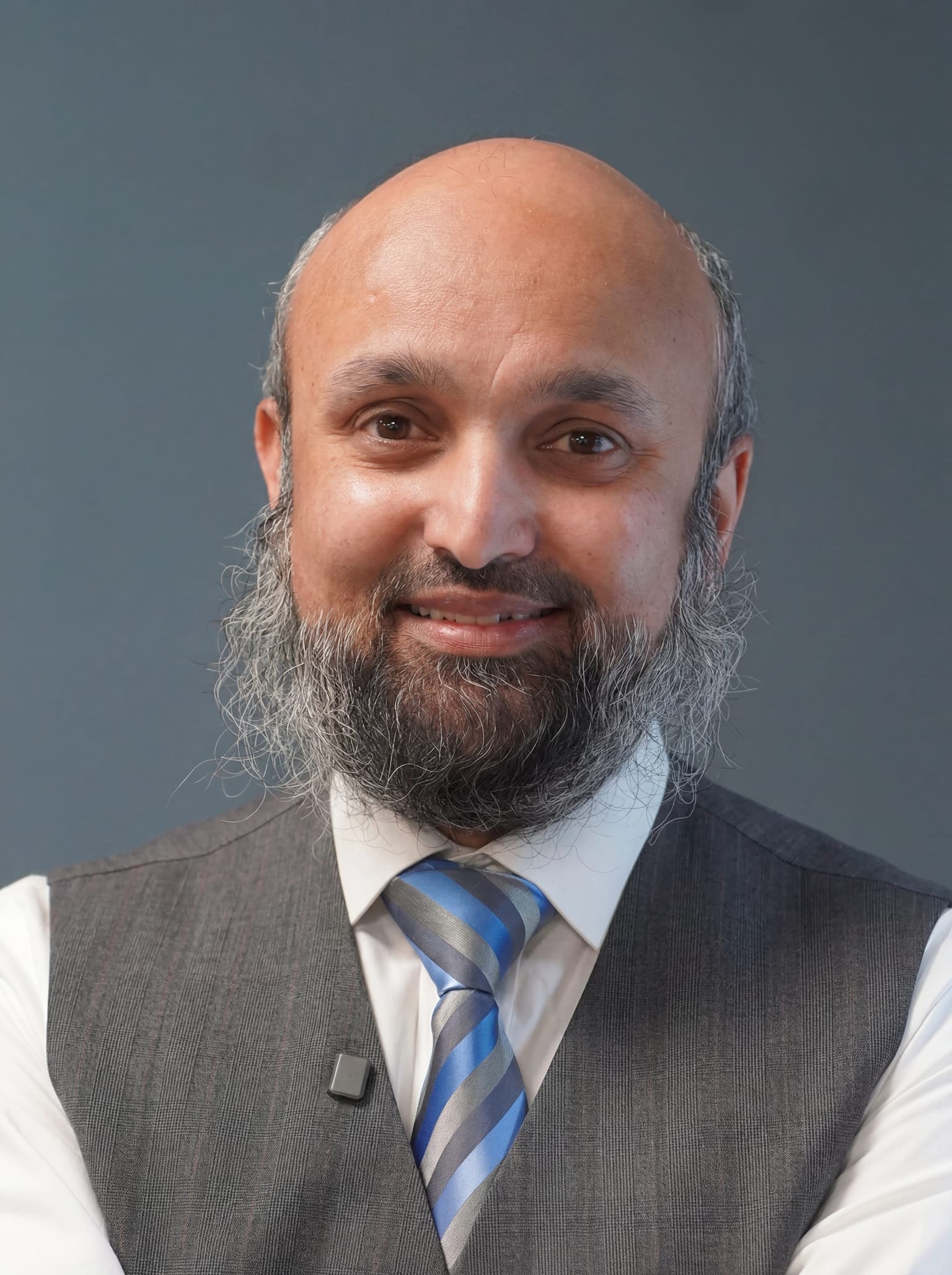
Dr Fayyaz Musa
MBChB (Edin) · FRCOphth (Lon) · CertLRS (RCOphth) · PGDipCRS
Founder & Consultant Corneal, Cataract & Glaucoma Surgeon

Dr Fayyaz Musa is the founder of The Eye Doctor Clinic and a recognised expert in anterior segment surgery. He is one of a small number of surgeons in the UK who holds dual fellowship training in both corneal disorders and glaucoma, and is the pioneer of DMEK surgery in the North of England. In cataract surgery, Dr Musa combines meticulous surgical technique with advanced biometry to deliver outstanding visual outcomes — including premium trifocal and toric lens implants for patients seeking full spectacle independence.
Meet the Team


Where to Find Us
Three convenient locations across West Yorkshire. Visit us for consultations, diagnostics, and treatments.
Bolton
136 – 140 Newport St
Bolton, Greater Manchester
BL3 6AB
Huddersfield
Woodlands, 4 Longbow Close
Huddersfield, HD2 1GQ
Consult a Specialist for CAIRS Treatment
A thorough assessment with Prof. Irfan Jeeva will confirm your suitability and provide a clear, personalised treatment plan. Call +44 1484 627779 or book online.