
Corneal Cross-Linking
CXL for Keratoconus
The only proven treatment to halt keratoconus progression. Corneal cross-linking uses riboflavin and UV-A light to create new bonds between collagen fibres, stiffening and strengthening your cornea , preventing further thinning and reducing the risk of needing a corneal transplant.
Affiliations & As Seen In









Read About Our Happy Patients
What a great experience! Very reassuring and I am very grateful for the consultation from Dr Musa he was so helpful in helping me make a decision to proceed to having eye correction surgery. I have the upmost confidence in him and the team at the Eye Doctor Clinic, Huddersfield.
Lozza 747I had implants with Dr Musa ten years ago. It was the best thing I've ever done. They are brilliant. My sight both near and distant was very poor but since the op I've had no glasses no lenses and my sight has been super. It remains really good to this day. Thank you Dr Musa. Brilliant consultations and treatment for glaucoma since.
Kay FitbitI can highly recommend the Eye Doctor Clinic, and I am so pleased I went there. Dr Musa, Gemma and Jess are lovely. They are very knowledgeable and were able to answer all my questions. My vision following surgery is great, and not having to wear glasses is fantastic.
Carol PeelHow Cross-Linking Works
Your cornea is made of layers of collagen fibres arranged in a precise pattern. In keratoconus, the bonds between these fibres weaken, causing the cornea to thin and bulge progressively. Cross-linking reverses this weakening by creating new, stronger bonds.
During the procedure, riboflavin (vitamin B2) is soaked into your cornea over 30 minutes. It serves two roles: as the photosensitising agent that triggers new collagen bonds, and as a protective UV shield that absorbs light before it reaches deeper eye structures like the lens and retina.
A focused UV-A light is then applied for a further 30 minutes. The interaction between UV light and riboflavin generates reactive oxygen species that create new covalent bonds between and within the collagen fibres. The result is a significantly stiffer, stronger cornea that resists further deformation.
CXL at a Glance
- Condition: Keratoconus & corneal ectasia
- Goal: Halt progression (not vision correction)
- Method: Riboflavin + UV-A light
- Technique: Epi-off (gold standard)
- Duration: 60–90 minutes
- Recovery: 1–2 weeks to daily activities
- Stability: 6–12 months for full effect
- Success: 90%+ halt progression
The Procedure
Pre-Operative Assessment
Your corneal specialist maps your cornea with advanced topography, measures thickness with pachymetry, and assesses progression to confirm CXL is the right treatment and establish a baseline.
Anaesthetic Drops
Numbing drops are applied to completely anaesthetise your eye. No injections or needles are used. You will be awake and comfortable throughout the procedure.
Epithelium Removal
The thin outer layer of the cornea (epithelium) is gently removed. This allows the riboflavin to penetrate deeply into the corneal tissue for maximum effectiveness.
Riboflavin Soaking
Riboflavin (vitamin B2) eye drops are applied to the corneal surface for approximately 30 minutes. The riboflavin saturates the corneal collagen and acts as both the photosensitising agent and a protective UV shield for deeper eye structures.
UV-A Light Activation
A focused beam of ultraviolet-A light is directed at the riboflavin-soaked cornea for approximately 30 minutes. This activates a chemical reaction that creates new bonds between collagen fibres, stiffening and strengthening the cornea.
Bandage Lens & Recovery
A protective bandage contact lens is placed over the cornea while the epithelium regenerates (5–7 days). Antibiotic and anti-inflammatory drops are prescribed. Your consultant monitors healing at follow-up visits.
Key Benefits
Recovery Timeline
Most discomfort (pain, sensitivity, tearing). Bandage lens worn. Frequent drops required.
Pain subsides. Epithelium regenerating. Bandage lens removed at clinic visit.
Return to normal daily activities. Vision still blurry. 1–2 weeks off work recommended.
Vision gradually improving. Light sensitivity decreasing. Cornea continuing to strengthen.
Corneal shape stabilising. Topography showing improvement.
Prescription stabilises. New glasses or contact lenses can be fitted if needed.
Avoid rubbing your eye, swimming, and contact sports during recovery. Wear sunglasses outdoors for comfort as light sensitivity resolves.
CXL FAQs
Keratoconus is a progressive condition where the cornea (the clear front surface of the eye) gradually thins and bulges into a cone shape. This causes increasingly distorted and blurred vision that cannot be fully corrected with standard glasses. It typically begins in the teenage years or early twenties.
Cross-linking creates new chemical bonds between the collagen fibres that give your cornea its structure. By strengthening these bonds, the cornea becomes stiffer and more resistant to further thinning and bulging. It is the only treatment proven to halt keratoconus progression.
The primary goal of CXL is to stabilise your cornea and prevent further deterioration , not to improve existing vision. However, some patients do experience modest improvements in corneal shape and visual clarity over the following months. For vision improvement, additional treatments such as specialty contact lenses or intracorneal ring segments may be recommended.
Most patients experience only mild discomfort during the procedure itself thanks to anaesthetic drops. However, the first 2–3 days after surgery can be uncomfortable, with grittiness, light sensitivity, and watering. Pain medication and lubricating drops are provided, and the discomfort typically resolves by day 5.
The bandage contact lens is removed after 5–7 days once the epithelium has healed. Most patients return to normal activities within 1–2 weeks. Vision may remain blurry for 1–3 months and prescription stability can take 6–12 months. You should take at least 1 week off work.
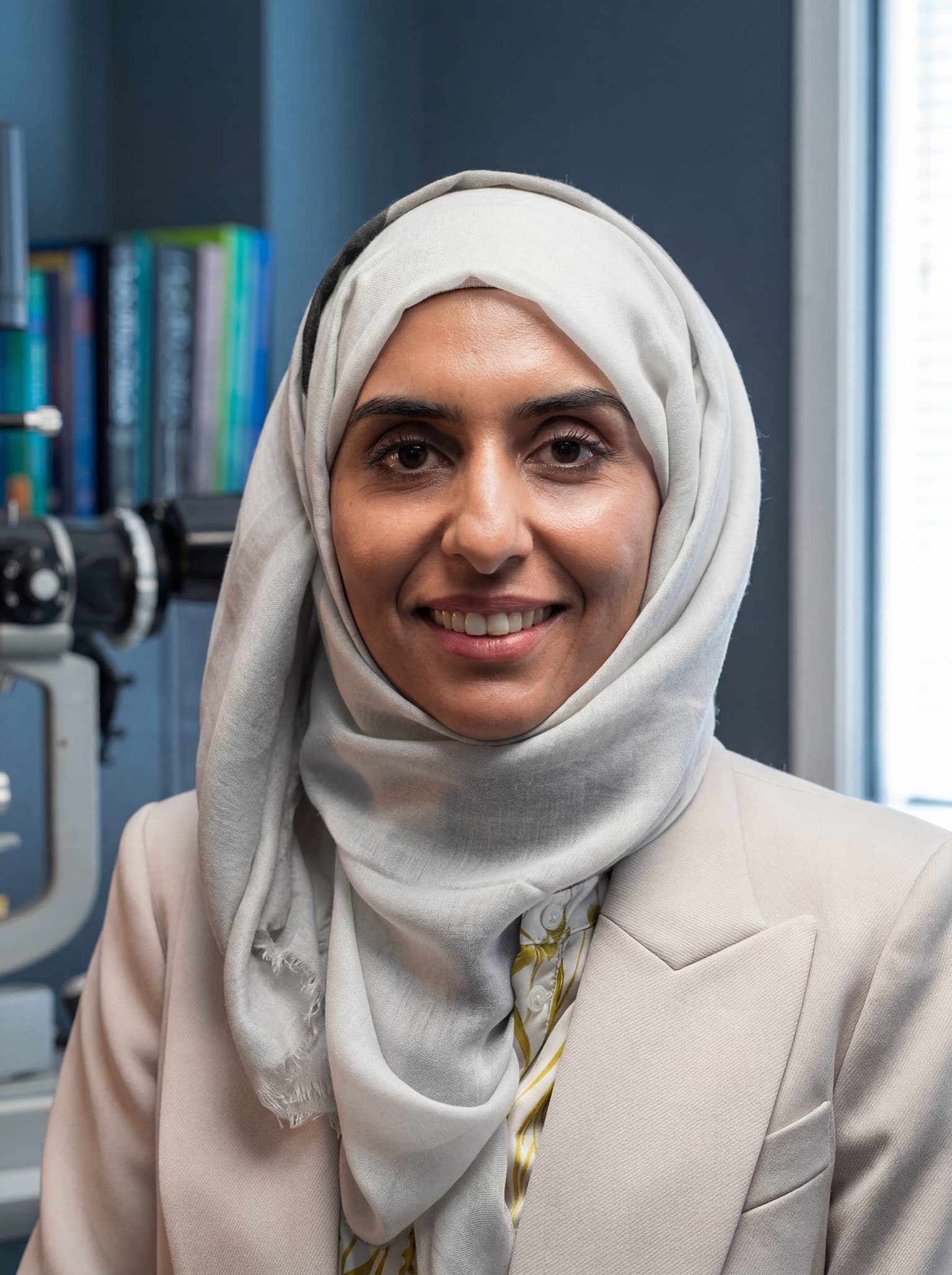
Dr Fayyaz Musa
MBChB (Edin) · FRCOphth (Lon) · CertLRS (RCOphth) · PGDipCRS
Founder & Consultant Corneal, Cataract & Glaucoma Surgeon

Dr Fayyaz Musa is the founder of The Eye Doctor Clinic and a recognised expert in anterior segment surgery. He is one of a small number of surgeons in the UK who holds dual fellowship training in both corneal disorders and glaucoma, and is the pioneer of DMEK surgery in the North of England. In cataract surgery, Dr Musa combines meticulous surgical technique with advanced biometry to deliver outstanding visual outcomes — including premium trifocal and toric lens implants for patients seeking full spectacle independence.
Meet the Team




Where to Find Us
Three convenient locations across West Yorkshire. Visit us for consultations, diagnostics, and treatments.
Bolton
136 – 140 Newport St
Bolton, Greater Manchester
BL3 6AB
Huddersfield
Woodlands, 4 Longbow Close
Huddersfield, HD2 1GQ
Diagnosed with Keratoconus?
Early treatment is essential. Book a consultation with our fellowship-trained corneal specialist to find out if cross-linking can protect your vision. Call +44 1484 627779 or book online.